
VALSUANI
Valsuani
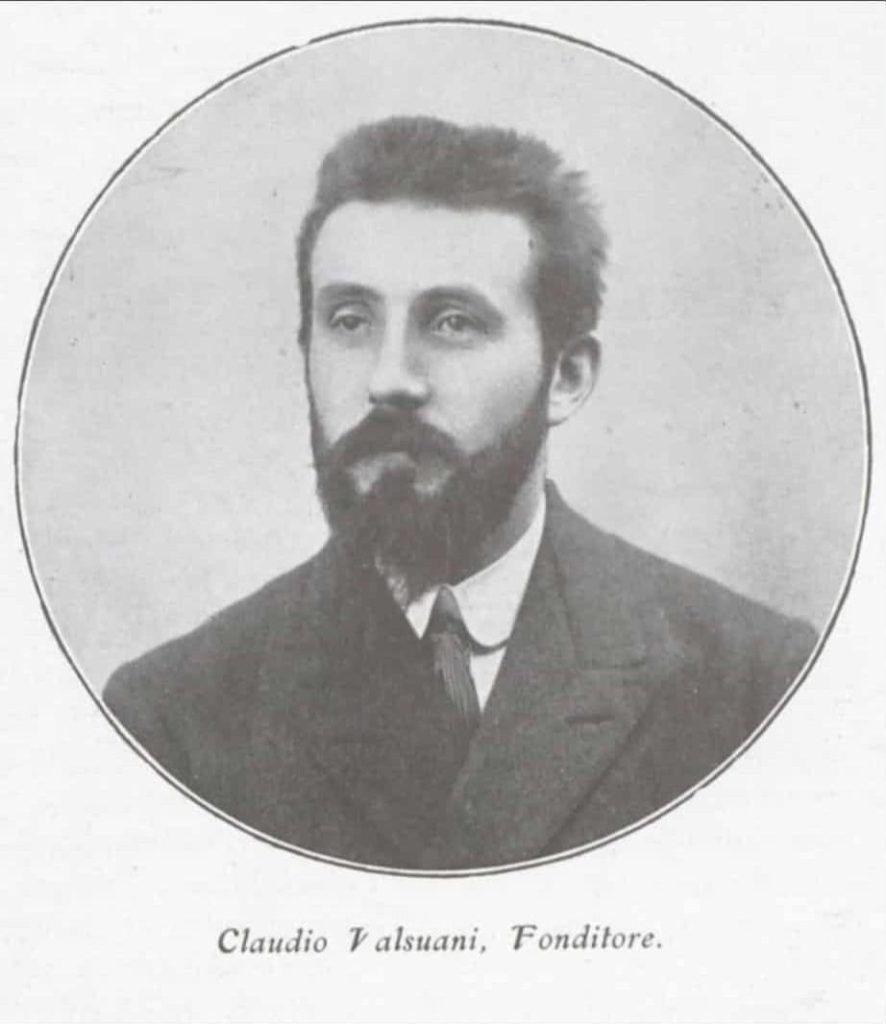
The Valsuani foundry was founded by Claude Valsuani (1876–1923), an Italian-born master of lost-wax (cire perdue) bronze casting, at 74 Rue des Plantes in Paris. The oft-cited founder “Marcello Valsuani” never existed: the name appears in zero of the 23 primary documents examined in this research.
A forensic investigation debunking one of art history’s most persistent myths: the existence of ‘Marcello Valsuani,’ long credited as founder of the legendary Paris bronze foundry. Through systematic
analysis of 23 primary documents (including birth certificates, passports, death records, and business correspondence) this research reveals that Marcello never existed. The name appears in zero official
documents. The real founder was Claude Valsuani (1876-1923), son of Carlo. This case study exposes how unverified claims propagate through auction catalogs and scholarly literature, crystallizing into
accepted ‘fact’ through sheer repetition. A cautionary tale about the urgent need for primary source verification in art historical scholarship.
Timeline
†1886
DED
1908
More Valsuani Research
- What Is a Valsuani Bronze Worth?
- Rembrandt Bugatti and Valsuani Bronze Casts: Hebrard vs. Valsuani Marks
- Are the Valsuani Degas Plasters Real? The Controversy, Evidence, and Open Questions
Last updated: 7 September 2026
Topic Pages (8)

Who Founded the Valsuani Foundry?
Primary source documents including birth certificates, passports, and death records consistently identify Claude Valsuani (1876-1923) as the founder of the legendary Paris bronze foundry. The name 'Marcello Valsuani' appears in zero official documents, it is a myth propagated through secondary sources.
Read the Full Study
Claude Valsuani: Master Bronze Founder
Born Claudio Valsuani in 1876 in Crescenzago, Italy, Claude Valsuani became one of the most celebrated bronze founders in Paris, casting masterworks for Degas, Bugatti, and Pompon at his foundry on 74 Rue des Plantes.
Read the Full Study
Lost-Wax Bronze Casting: The Valsuani Method
Claude Valsuani was a master of cire perdue (lost-wax) bronze casting, an ancient technique dating back five millennia. At 74 Rue des Plantes in Paris, he achieved technical excellence that attracted the greatest sculptors of the modern era.
Read the Full Study
Valsuani Bronze Authentication
A comprehensive authentication resource: foundry marks and stamps, primary source documents, and methodological guidance for researchers, collectors, and institutions evaluating Valsuani bronzes.
Read the Full Study
The Valsuani Legacy
Valsuani bronzes occupy pride of place in the world's greatest museums, the Metropolitan, the Musée d'Orsay, the National Gallery. Understanding this legacy, and why accurate history matters, is essential for the integrity of art historical scholarship.
Read the Full Study
What Is a Valsuani Bronze Worth?
Real Valsuani bronze auction results, the six factors that drive value, and how to tell a genuine C. Valsuani mark from a myth-based misattribution.
Read the Full Study
Rembrandt Bugatti and Valsuani Bronze Casts: Hébrard vs. Valsuani Marks
How Rembrandt Bugatti’s friendship with Claude Valsuani links two Paris foundries: the exclusive Hébrard casts made during his lifetime and the later Valsuani-marked editions, and what each foundry mark does and doesn’t prove about authenticity and value.
Read the Full Study
Are the Valsuani Degas Plasters Real? The Controversy, Evidence, and Open Questions
The unresolved dispute over roughly 73-75 plaster figures found at the Valsuani foundry: what proponents claim, why most independent Degas scholars remain unconvinced, and what the primary evidence actually proves and does not prove.
Read the Full StudyFAQ Q&A