
SENUFO HORNBILL
From Sacred Grove to Western Gallery: Cultural Translation and Loss
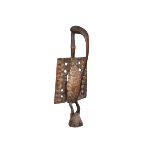
By the mid-20th century, large Senufo bird sculptures filled West African tourist markets. What had been sacred ritual objects vessels of spiritual power connecting communities to ancestors and divine forces became commodities for Western collectors. This transformation represents not merely commercial exchange but a fundamental category error: treating as art objects items conceived and created as spiritual technology.
The Original Ritual Context
In traditional Senufo practice, hornbill sculptures served multiple integrated spiritual functions:
Agricultural Guardians: Positioned in cultivated fields, they invoked ancestral blessings and divine protection. These weren’t decorative scarecrows but spiritual conduits making present the creative power of the “first creature” to ensure continued fertility.
Initiation Tools: During Poro ceremonies spanning decades, hornbill figures appeared as teaching aids and spiritual guardians. Their presence marked spaces and moments when divine knowledge transferred to initiates.
Funeral Guides: In dry funeral ceremonies, hornbill imagery helped guide deceased souls through dangerous regions toward the ancestor world. The bird’s primordial status as mediator between divine and mortal realms qualified it to mediate between mortal and ancestral realms in death.
Fertility Vessels: Carried during ceremonial dances, hornbill sculptures became animated vessels. Participants believed divine power flowed through them to renew the community’s generative capacity.
Western ‘Discovery’ and Aesthetic Appropriation
When European collectors and dealers encountered these sculptures in the early-to-mid 20th century, they recognized aesthetic power but fundamentally misunderstood purpose:
Formal Appreciation, Functional Erasure:
- Western observers praised “abstract” geometric forms and elongated proportions
- Ritual function dismissed as primitive superstition rather than sophisticated spiritual technology
- Sculptural form celebrated; encoded knowledge system ignored
- Visual impact valued; experiential meaning lost
Market Creation:
- Economic pressure encouraged both authentic ritual objects and tourist reproductions to reach markets
- Dealers actively sought pieces for Western collections
- Distinction between ritual objects and tourist art became increasingly blurred
- Financial incentives sometimes prompted communities to sell sacred objects
Museum Institutionalization:
- Major institutions like Metropolitan Museum of Art, Yves Saint Laurent Museum display hornbill sculptures as fine art
- Presentation emphasizes aesthetic analysis over spiritual function
- Context shifts from living ritual to frozen history
- Indigenous knowledge systems marginalized in favor of Western art historical frameworks
What Persists, What Disappears
In Western institutional recontextualization:
Elements Retained:
- The distinctive silhouette (elongated beak, extended form, vertical posture)
- Geometric wing boards and carved patterns
- Curved beak touching protruding belly
- Visual power and formal elegance
Elements Lost or Altered:
- Ceremonial function and spiritual societal role (initiation, guardianship, divination)
- Marks of ritual use, age, symbolic paint with specific meanings
- Deep connection to Senufo oral history and living myth
- Experiential knowledge accessible only through initiation
- Understanding of the sculpture as living spiritual practice rather than aesthetic object
- The epistemological framework that makes symbolic encoding comprehensible
The Epistemological Gap
This transformation creates a fundamental knowledge problem: Western institutions can document what they can see form, materials, geographic origin, approximate date but remain structurally incapable of accessing what they can’t see ritual efficacy, spiritual power, initiatory knowledge, embodied meaning.
A Poro initiate viewing a hornbill sculpture understands it through 21 years of embodied knowledge ceremony, instruction, symbolic immersion. A museum visitor sees only frozen form. The Met’s documentation isn’t wrong it accurately describes what Western art history can know. But it’s necessarily incomplete, presenting certainty about form while remaining silent on depths of meaning accessible only through initiation.
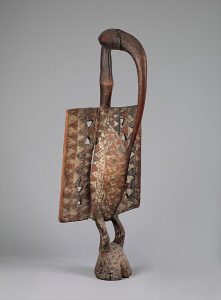
Details (2)
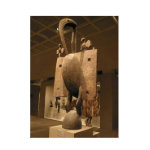
The Met Museum Paradox: Preservation Through Decontextualization
The Metropolitan Museum of Art's Senufo collection demonstrates how Western institutions preserve material form while systematically erasing cultural context, creating knowledge that is simultaneously accurate and profoundly incomplete.
Read the Full Study
Yves Saint Laurent's Collection: High Fashion Meets Sacred Art
Fashion icon Yves Saint Laurent's 1960 acquisition of a Senufo hornbill as his first art purchase (and his subsequent African-inspired design work) demonstrates how Western aesthetic appreciation can coexist with profound cultural misunderstanding.
Read the Full Study