
SENUFO HORNBILL
Poro Initiation: Spiritual Education Through Art
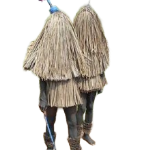
The Poro society represents the most important educational and social institution in traditional Senufo life. This secret association guides young boys toward becoming respected community members through rigorous mental and physical training spanning up to 21 years across three seven-year stages with an optional fourth stage few complete.
Within this educational framework, hornbill imagery plays a central structuring role. The bird’s primordial status as “first creation” makes it the ideal symbol for teaching cosmology, agriculture, social responsibility, and spiritual knowledge. As initiates progress through Poro stages, their understanding of the hornbill deepens what begins as simple recognition evolves into profound theological comprehension.
The Three-Stage Journey
Stage 1 – Poworo (Ages 6-10): Symbolic Death and Rebirth
The Poro journey begins dramatically. Masked figures extract boys from their mothers’ huts at night, symbolizing separation from childhood. Elders prepare a secret grove called the “sinzanga” at the village’s edge, where initiates will remain until achieving full community membership.
Following circumcision symbolizing the death of childhood, young initiates apply kaolin protective white chalk to their faces and bodies to repel evil spirits. Forbidden from entering villages or acknowledging outsiders, they undergo instruction in “work for old mother” teachings honoring an ancient protective deity and ancestors.
At this stage, initiates first encounter hornbill imagery:
- Learning to recognize and name the Porpianong symbol
- Understanding its basic association with fertility and community continuity
- Observing how elder members use hornbill carvings in ceremonies
- Beginning to internalize the bird’s significance through ritual exposure
The kponyungo (“firespitter”) mask associated with hornbill symbolism guides deceased high-ranking Poro members’ souls toward the ancestral realm, teaching young initiates about death, transformation, and spiritual continuity.
Stage 2 – Kwonro (Adolescence): Learning Through Making
Adolescent initiates learn to create ritual objects including hornbill sculptures. This hands-on craftsmanship deepens understanding carving the distinctive curved beak touching the belly requires comprehending the symbolism being encoded.
Kwonro stage education includes:
- Ritual costume and liturgical accessory creation
- Ceremonial dances and ritual songs
- Advanced understanding of hornbill symbolism in agricultural and human fertility
- Observation of how elder members deploy hornbill imagery in community ceremonies
Older colobeles (age cohorts) mentor younger ones, creating peer-based learning networks that reinforce hornbill knowledge through teaching.
Stage 3 – Tyolog (Ages 30-35): Philosophical Depth
Only in Tyolog do initiates learn the full creation mythology explaining the hornbill’s primordial status. They discover how the bird’s “first creation” position makes it the original repository of divine knowledge about fertility, agriculture, and community structure.
Ceremonies deepen understanding of traditional mythology, religion, and specialized languages while bestowing secret names. Certified members gain authority to make community decisions regarding political, religious, and social matters.
Stage 4 – Kaffono: Supreme Knowledge
Few complete Kaffono, which reveals the deepest mysteries of how symbolic knowledge structures reality itself. Those achieving this level gain authority to interpret hornbill symbolism for the community and pass this understanding to the next generation.

Details (3)
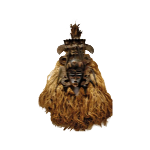
Knowledge Transmission Through Symbolic Language
Poro education employs secret metaphorical language and ritual rather than direct instruction, with hornbill imagery serving as a visual text that initiates learn to 'read' with increasing sophistication across years of training.
Read the Full Study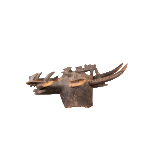
Masks, Spirits, and Ancestral Guidance: The Kponyungo Firespitter
The kponyungo mask (associated with hornbill symbolism and worn during funeral rites) guides deceased Poro members' souls toward the ancestral realm, teaching initiates about death, transformation, and the continuity between living and spiritual worlds.
Read the Full Study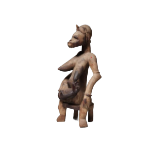
Contemporary Challenges: Islam, Christianity, and Modernization
Modern Senufo communities face mounting pressure on traditional Poro initiation from Islamic and Christian religious conversion, formal education systems, and urban migration, threatening the transmission of hornbill-related knowledge to future generations.
Read the Full Study