
VALSUANI
The Valsuani Legacy
Valsuani bronzes today are held by the Metropolitan Museum of Art, the Musée d’Orsay and other major collections, with auction results ranging from thousands to millions of dollars — value that ultimately rests on accurate attribution to the real founder, Claude Valsuani (1876–1923).
The bronzes cast at Claude Valsuani’s foundry occupy pride of place in museum collections worldwide. From the Metropolitan Museum of Art in New York to the Musée d’Orsay in Paris, works bearing the “C. VALSUANI” stamp represent the pinnacle of lost-wax casting excellence. Understanding this legacy (and why accurate historical attribution matters) is essential for everyone who cares about art.
Major Museum Holdings
Metropolitan Museum of Art, New York: Home to multiple Degas dancer bronzes, many cast at Valsuani after the artist’s death in 1917. The “Little Fourteen-Year-Old Dancer” ranks among the museum’s most beloved and valuable works.
Musée d’Orsay, Paris: Houses François Pompon’s monumental “Ours Blanc” (Polar Bear), the work that brought Pompon fame at age sixty-seven. Valsuani’s casting captured Pompon’s revolutionary simplified forms with exceptional fidelity.
Sladmore Gallery, London: This specialist gallery focuses on Rembrandt Bugatti bronzes, many cast at Valsuani. These works document the intimate friendship between the sculptor and Claude Valsuani.
The Market
Valsuani bronzes appear regularly at Christie’s, Sotheby’s, and Bonhams, commanding prices from tens of thousands to millions of dollars depending on artist, subject, condition, and edition placement.
Why Accuracy Matters
The “Marcello Valsuani” myth is not merely an academic footnote, it has tangible consequences for authentication, provenance research, and market integrity. When experts cite a fictional founder, they undermine the evidentiary framework upon which authenticity judgments depend. This correction restores factual integrity to the Valsuani narrative and honors Claude Valsuani, son of Carlo, the man who actually built this legendary foundry.
A Later, Disputed Chapter
That same commitment to primary-source accuracy applies to later chapters of the foundry’s history. A set of plaster figures found at Valsuani decades after Claude Valsuani’s death, under different ownership, remains the subject of active scholarly dispute — see our Are the Valsuani Degas Plasters Real? evidence dossier on the Airaindor-Valsuani plasters controversy.
The French state itself recognized the dynasty: Marcel Valsuani was made Chevalier de la Légion d’Honneur in 1953 and nominated Chevalier de l’Ordre National du Mérite in 1967, the ministry praising bronzes that “rival the finest Florentine bronzes of the sixteenth century” — state honors awarded to the real, documented family line of Claude and Marcel, in which no “Marcello” ever appears.
Last updated: 7 September 2026
Details (3)

Valsuani Bronzes in Museums
Discover where to experience Valsuani-cast bronzes: the Metropolitan Museum, Musée d'Orsay, National Gallery, Sladmore Gallery, and major collections worldwide.
Read the Full Study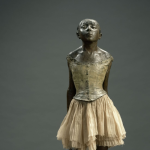
Valsuani and Degas
The iconic Degas 'Little Fourteen-Year-Old Dancer' and related bronzes were cast at Valsuani after the artist's death, representing the intersection of two masters.
Read the Full Study
Why Accurate History Matters
The Marcello myth has real consequences for authentication, provenance, scholarship, and market integrity. Correcting this error restores factual foundation to Valsuani studies.
Read the Full Study