
VALSUANI
Valsuani Bronze Authentication

How do you authenticate a Valsuani bronze? Examine the foundry stamp (genuine casts bear “CIRE PERDUE C. VALSUANI”), assess the casting quality and patina, and verify the provenance trail against primary documents. A stamp alone proves nothing: authentication rests on documents, marks and casting evidence together.
Authenticating a Valsuani bronze requires understanding both the physical marks that identify genuine casts and the documentary evidence that establishes the foundry’s true history. This resource presents the essential knowledge for researchers, collectors, auction specialists, and museum professionals.
Foundry Marks and Stamps
What does the C. Valsuani cire perdue mark look like? Genuine Valsuani marks read “C. VALSUANI”, “CIRE PERDUE C. VALSUANI”, or “VALSUANI CIRE PERDUE”, incised or cast into the bronze’s base or reverse in small, plain lettering, sometimes followed by “PARIS”. The initial is always “C.” for Claude. A mark reading “M. VALSUANI” is not genuine — it points to the fictional “Marcello”, who never existed.
Authentic Valsuani bronzes bear distinctive marks that identify their origin:
- “C. VALSUANI”, The most common foundry stamp
- “CIRE PERDUE C. VALSUANI”, Emphasizing the lost-wax technique
- “VALSUANI CIRE PERDUE”, Variant arrangement
- “C. VALSUANI CIRE PERDUE PARIS”, Full geographic identification
Critical Observation: In all authentic Valsuani marks, the initial is “C.” for Claude, never “M.” for the fictional Marcello. Any source citing “M. VALSUANI” or “Marcello Valsuani” reveals reliance on discredited secondary literature rather than primary research.
Primary Document Evidence
Six categories of primary documents establish the true Valsuani history:
- Claude’s Birth Certificate (1876): Proves father was Carlo
- Claude’s Passport (1911): “figlio di sig. Carlo”
- Claude’s Death Certificate (1923): “figlio di fu Carlo”
- Carlo’s Death Certificate (1886): Died thirteen years before foundry establishment
- Business Letterhead (1929): “C. VALSUANI”
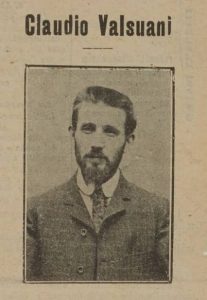
- Le Monde Contemporain Article: Contemporary press naming Claude as founder
Authentication Protocol
When evaluating a Valsuani bronze, professionals should: verify authentic “C. VALSUANI” marks; research provenance to documented editions; scrutinize sources citing “Marcello Valsuani” as indicating insufficient primary research; and consult this documentary evidence when foundry history questions arise.
Note on Posthumous Casts
When authenticating Valsuani bronzes of sculptors who predeceased Claude Valsuani (notably Edgar Degas, who died in 1917), remember that all such works are posthumous casts. The “C. VALSUANI” stamp on these pieces confirms they were produced under Claude’s direct supervision between the sculptor’s death and Claude’s own death in 1923. This distinction matters for provenance, valuation, and catalogue attribution.
A Separate, Disputed Chapter: The Airaindor-Valsuani Plasters
The authentication protocol above covers Claude Valsuani-era bronzes and their documented posthumous casts under his own foundry. A different, unresolved question concerns a set of plaster figures that surfaced decades later at the same foundry under different (post-1980) ownership, from which bronzes have been cast and sold since 1997. See our Are the Valsuani Degas Plasters Real? dossier for the full evidence timeline and open questions on that separate dispute.
Last updated: 7 September 2026
Details (6)
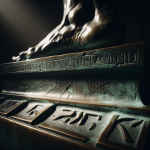
Valsuani Stamps and Signatures
A field guide to identifying authentic Valsuani foundry stamps. All genuine marks use 'C.' for Claude, never 'M.' for the fictional Marcello.
Read the Full Study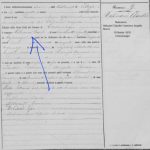
Birth Certificate Evidence
Claude's 1876 birth certificate from Crescenzago explicitly states 'è comparso Valsuani Carlo', official state documentation proving Carlo was his father.
Read the Full Study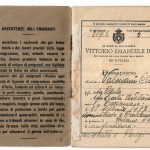
Passport Evidence: 'Figlio di Carlo'
Claude's 1911 Italian passport explicitly states 'figlio di sig. Carlo', official government identification issued during the foundry's operating years, confirming his parentage.
Read the Full Study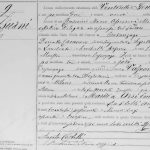
Death Certificates
Death certificates of both Claude (1923) and Carlo (1886) confirm the family relationship and establish the chronological impossibility of the Marcello myth.
Read the Full Study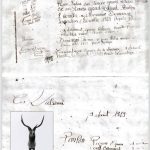
Business Documents
Original Valsuani foundry letterheads display 'C. VALSUANI' and 'FONDEE EN 1908', official commercial documentation that never references 'M. VALSUANI' or Marcello.
Read the Full Study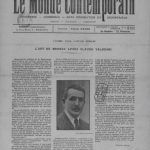
Contemporary Newspaper Articles
Le Monde Contemporain's article 'L'Art du Bronze Après Claude Valsuani' names Claude as founder, a contemporary source written when living witnesses could verify or contest claims.
Read the Full Study