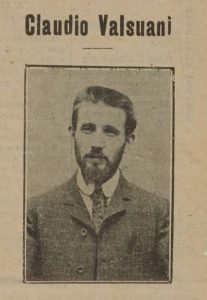
VALSUANI
Rembrandt Bugatti and Valsuani Bronze Casts: Hébrard vs. Valsuani Marks
Search for “Rembrandt Bugatti Valsuani bronze casts” today and the results are dominated by galleries and auction houses (Sladmore, Macklowe, 1stDibs, Wikipedia), not by any dedicated research resource. Yet the connection between Bugatti and the Valsuani foundry is real, documented, and directly tied to the Claude Valsuani history already established on this site: Bugatti’s own Italian background and Parisian friendships are part of how Claude Valsuani built his reputation and, eventually, his own foundry.
Did Valsuani Cast Bugatti Bronzes?
Not during his lifetime. Rembrandt Bugatti (1884-1916) worked under an exclusivity contract with Adrien-Aurélien Hébrard’s foundry from 1904 until his death, so every authorized lifetime cast bears the Hébrard mark. The Valsuani foundry, run by Bugatti’s friend Claude Valsuani, only cast his animal bronzes posthumously, decades later.
Hébrard vs. Valsuani Marks
A lifetime Bugatti bronze is stamped “R Bugatti [edition no.] Cire Perdue A.A. Hébrard,” reflecting his 1904-1916 exclusivity contract. A “C. Valsuani” or “Cire Perdue C. Valsuani” mark on a Bugatti-attributed bronze indicates a later cast made after his death, never an authorized lifetime edition. Provenance and edition history still need separate verification.
How Bugatti’s Italian Connections Reached Hébrard’s Foundry
Claude Valsuani was himself an Italian émigré to Paris. According to the French Wikipedia entry for the Fonderie Valsuani, his skill in lost-wax casting and hot-patina finishing “immediately seduced one of the most important founders of the era, Adrien-Aurélien Hébrard, whose workshop he joined in 1902” (fr.wikipedia.org, Fonderie Valsuani, accessed September 2026). The same source credits Valsuani’s “innovative spirit and friendships in the art world, namely the sculptor Rembrandt Bugatti,” with helping the young founder quickly build a solid reputation inside Hébrard’s workshop.
That friendship left a physical trace: the French heritage documentation site e-monumen.net records a Bugatti bronze inscribed “À l’ami Valsuani” (“To my friend Valsuani”) (e-monumen.net, Valsuani, accessed September 2026). Bugatti was Italian by birth and upbringing (born in Milan, son of furniture designer Carlo Bugatti), and it is this shared Italian background inside a French foundry world, more than any single introduction, that the historical record credits for bringing the two men together at Hébrard’s atelier.
A note on names: some secondary sources, including the English Wikipedia article on Rembrandt Bugatti and e-monumen.net’s own account, attribute this generation of the friendship to “Marcello Valsuani,” described as Claude’s father. Our own primary-source research into the Valsuani foundry’s founding has already established that no person named Marcello appears in any birth certificate, passport, or death record connected to the family; the individual who joined Hébrard’s workshop in 1902 and later opened his own foundry in 1908 is Claude Valsuani, son of Carlo. See Who Founded the Valsuani Foundry? for the full documentary case. Treat any source naming “Marcello” in this period as relying on the same discredited attribution.
From Hébrard’s Atelier to His Own Foundry
Bugatti signed his own exclusivity contract with Hébrard in 1904 and exhibited annually at the Galerie Hébrard from that year (en.wikipedia.org, Rembrandt Bugatti, accessed September 2026); every authorized lifetime cast of his work was produced at Hébrard’s foundry under that arrangement. e-monumen.net’s account goes further, describing Bugatti as “very confined by his contract with Hébrard” and reporting that he considered breaking it to have his works cast by Valsuani instead, “encouraging him to set up on his own account.” Claude Valsuani did exactly that in 1908, opening his own foundry at 74 Rue des Plantes in Paris’s 14th arrondissement, as already documented on our Claude Valsuani: Master Bronze Founder page. The source itself hedges this as a probable rather than certain account (it uses conditional language, “aurait envisagé” / “would have considered”), so we present it the same way: a well-documented friendship and a plausible, but not fully proven, causal push toward Valsuani’s independence.
Who Cast What: Hébrard Lifetime Casts vs. Later Valsuani Casts
During Bugatti’s life, casting was not shared: Hébrard held the exclusive rights, and his foundry’s own numbered editions (often in runs of 10-25) are the only lifetime Bugatti bronzes. A representative example: a “Petite panthère assise,” conceived circa 1912 and cast in an edition of ten by the A.A. Hébrard foundry, sold at Bonhams for US$191,000 on 24 July 2024, stamped “R Bugatti (1) Cire Perdue A.A. Hébrard” on the back of the base (Bonhams, Petite panthère assise, sale 24 July 2024).
Bugatti died in 1916. Decades later, once his most popular models entered the French public domain for reproduction purposes and demand for his animal bronzes grew, other foundries, including the independent Valsuani foundry that Claude had built after 1908 and that his son Marcel continued until its 2016 closure, produced later castings of Bugatti-attributed models. Auction-market researchers documenting Valsuani’s output note that the foundry “made a specialty of producing posthumous casts of work by prominent artists, either as ‘originals’ under French law or as ‘reproductions’ once an artist has been dead for 70 years and their works have entered the public domain,” and count Rembrandt Bugatti among the artists whose bronzes carry this kind of later Valsuani mark (Invaluable.com, Rembrandt Bugatti artist page, accessed September 2026). A later Valsuani-marked Bugatti bronze is therefore never a lifetime Hébrard cast; it is a separate, later production run, and should be described and valued as such.
Mark Comparison Table: Hébrard vs. Valsuani
| Mark | Foundry period on Bugatti works | What it indicates |
|---|---|---|
| “R Bugatti [edition no.] Cire Perdue A.A. Hébrard” | 1904-1916 (Bugatti’s lifetime, under exclusivity contract) | An authorized lifetime cast, produced under Bugatti’s own supervision at the only foundry contracted to cast his work. |
| “C. Valsuani” / “Cire Perdue C. Valsuani” / “Valsuani Cire Perdue” | From the mid-20th century onward (after Bugatti’s 1916 death) | A later, posthumous cast produced at the independent Valsuani foundry (Claude Valsuani, then his son Marcel). Never a lifetime Hébrard edition; see our Valsuani Bronze Authentication guide for how to read this mark on any sculptor’s work. |
| “M. Valsuani” / “Marcello Valsuani” | Not a genuine period mark | Appears in zero primary documents. A red flag for the same discredited “Marcello” attribution addressed above and on our foundry-history page, regardless of which sculptor’s name accompanies it. |
What a Mark Does and Doesn’t Prove
A correct foundry mark is a starting point, not a conclusion. An authentic “Cire Perdue A.A. Hébrard” mark supports (but by itself does not prove) that a given cast is a lifetime edition; the edition number, casting style, patina, and documented provenance still need to be checked against the catalogue of Bugatti’s known models. Likewise, an authentic “C. Valsuani” mark on a Bugatti-attributed bronze confirms it passed through the genuine Valsuani foundry, but confirms nothing about when in that foundry’s long history (1908-2016) it was cast, nor whether it is a numbered original or a later reproduction cast after the 70-year public-domain threshold. Lifetime Hébrard casts and early, well-documented posthumous casts generally command a premium over later, larger-run reproductions; our value and appraisal guide sets out the same lifetime-vs-posthumous logic in more depth for Valsuani-marked bronzes generally.
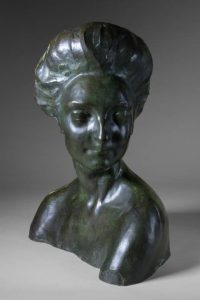
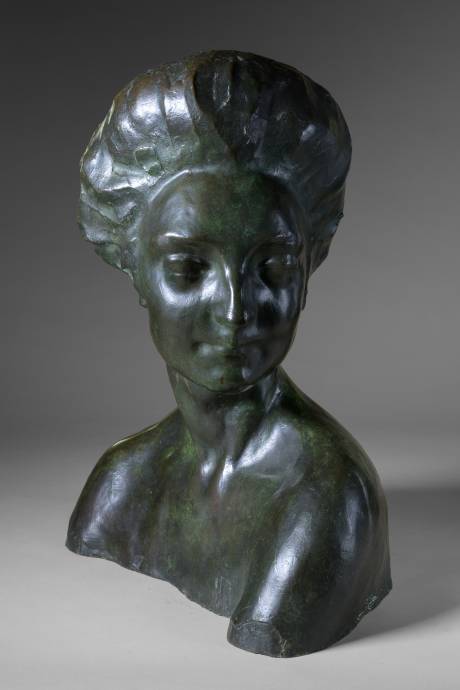
This distinction sits alongside our wider Rembrandt Bugatti provenance work: the Blanche Denise Ferrero-Willmann case study documents how a Bugatti portrait bust’s own dating and sitter history were flattened by exactly this kind of unexamined, repeated market language. Foundry marks and sitter provenance are different kinds of evidence, but both require the same discipline: check the primary record before repeating the catalogue description.
Frequently Asked Questions
Did Valsuani cast Bugatti bronzes?
Not during Bugatti’s lifetime. His entire authorized production (1904-1916) was cast exclusively by Adrien-Aurélien Hébrard’s foundry. The Valsuani foundry, built by Bugatti’s friend Claude Valsuani, produced later, posthumous castings of Bugatti-attributed models beginning decades after his 1916 death.
How do I tell a Hébrard mark from a Valsuani mark?
A lifetime Hébrard cast reads “R Bugatti [edition no.] Cire Perdue A.A. Hébrard.” A “C. Valsuani” or “Cire Perdue C. Valsuani” mark signals a later, posthumous cast from the independent Valsuani foundry, never an authorized lifetime edition, regardless of how the piece is described in a listing.
Were Bugatti and Claude Valsuani really friends?
Yes. French sources document a Bugatti bronze dedicated “À l’ami Valsuani” (“To my friend Valsuani”), and credit that friendship with helping the young Valsuani build his reputation inside Hébrard’s workshop after 1902, several years before he opened his own foundry in 1908.
Last updated: 7 September 2026