
SENUFO HORNBILL
Agricultural Fertility and the Cycle of Life
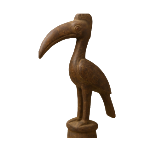
Among the Senufo people of West Africa, agriculture forms the foundation of existence. In a society where survival depends on successful planting, growth, and harvest, maintaining harmony with seasonal cycles becomes essential not merely practical but spiritual necessity.
The hornbill, called Porpianong, connects deeply to this agricultural spirituality. Its designation as “master among the birds” reflects not only intellectual prowess but its perceived mastery of the knowledge most critical to Senufo life: when to plant, when to expect rains, when to harvest.
Natural Behavior as Divine Template
Real hornbills specifically the yellow-casqued hornbill common in Senufo territory display behaviors that Senufo observers interpreted as demonstrations of agricultural knowledge:
- Earth Probing: The bird’s distinctive long beak probes soil searching for insects and food. Senufo agricultural tradition transformed this behavior into sacred symbolism the hornbill “planting” with its beak became the divine template for human seed-sowing.
- Seasonal Calls: Hornbill appearances and calls precede rainy seasons. Rather than viewing this as simple natural behavior, Senufo spiritual understanding interprets it as the bird exercising its primordial knowledge of seasonal patterns knowledge it possessed from the world’s creation.
- Nesting Patterns: The species’ unusual reproductive behavior females sealing themselves in tree cavities while males provision them suggested to Senufo observers the kind of communal cooperation and planning necessary for successful agriculture.
From Observation to Symbol
This natural imagery transformed the hornbill into a visual representation of seed-sowing and life-nurturing applicable to both agricultural fields and family lineages. The bird’s “pregnant” form distinctive curved beak touching protruding belly became the primary symbol for fertility in all its dimensions:
- Agricultural Fertility: Abundant crops, successful harvests, fields yielding sustenance
- Human Fertility: Procreation, childbirth, continuation of family lines
- Community Fertility: Growth of social bonds, transmission of knowledge, cultural continuity
Senufo artisans crafted striking wooden sculptures with elongated, stylized features emphasizing these characteristics. These sacred objects appeared during rituals and fertility dances, paraded or worn to invoke ancestral blessings and reinforce the sacred relationship between humans and land.
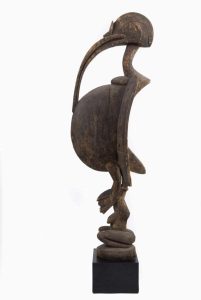
Details (3)
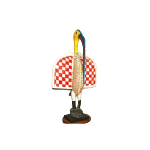
The Hornbill's Earth-Probing Beak: Divine Template for Planting
The hornbill's distinctive behavior of probing earth with its long curved beak became sacred symbolism in Senufo agricultural ritual, transforming natural feeding behavior into the divine template for human seed-sowing and earth cultivation.
Read the Full Study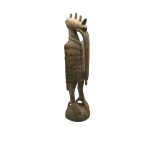
Seasonal Calls and Agricultural Timing: The Hornbill as Divine Calendar
Hornbill appearances and calls preceding rainy seasons became integral to Senufo agricultural decision-making, with Sandogo society diviners interpreting these natural patterns as divine communication of planting schedules.
Read the Full Study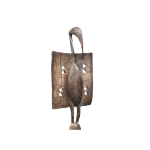
The 'Pregnant' Form: Encoding Procreation and Community Continuity
The hornbill sculpture's most distinctive formal feature (curved beak touching protruding belly) encodes the union of male and female principles necessary for all fertility: agricultural, human, and communal. This 'pregnant' form makes visible the creative power sustaining Senufo life.
Read the Full Study