
AGRICULTURAL FERTILITY AND THE CYCLE OF LIFE
The Hornbill’s Earth-Probing Beak: Divine Template for Planting
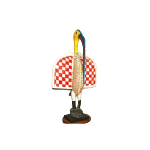
The yellow-casqued hornbill’s most distinctive feature its long, powerful, curved beak serves multiple functions in nature: defense, food gathering, nest construction. But for Senufo observers, the bird’s behavior of probing earth with this beak carried spiritual significance far beyond biological function.
Observed Behavior
Hornbills use their beaks to:
- Probe leaf litter and soil for insects
- Turn over earth searching for food
- Dig in soft ground to access underground prey
- Manipulate seeds and fruits
To human observers watching these behaviors, the hornbill appears to be “planting” inserting its beak into earth in motions remarkably similar to farmers planting seeds with digging sticks.
Symbolic Transformation
Senufo spiritual understanding transformed this observation into sacred knowledge: the hornbill wasn’t merely feeding but demonstrating the primordial template for agriculture. As the “first living being created by the gods,” its earth-probing established the pattern humans would later follow.
This theological interpretation explains several aspects of Senufo hornbill sculpture:
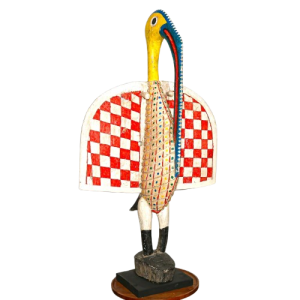
- Exaggerated Beak Length: Carvings typically feature beaks even longer than natural proportions, emphasizing the probing/planting function.
- Curved Beak Touching Belly: This ubiquitous formal feature depicts the moment of planting the beak (masculine, penetrative) entering the earth/belly (feminine, receptive) to plant the seed of future growth.
- Downward Orientation: Many ritual hornbill pieces position the beak pointing earthward, reinforcing the connection to agricultural activity rather than flight.
Ritual Application
This symbolism translated into specific ceremonial practices:
- Field Placement: Hornbill sculptures placed in cultivated fields served as guardians invoking the bird’s primordial knowledge of planting. Their presence reminded the earth itself of the original creative act, asking it to respond with fertility.
- Planting Ceremonies: Before sowing season, some Senufo communities held ceremonies where hornbill carvings were carried around field borders while elders invoked blessings. The carved beak symbolically re-performed the first planting, sanctifying human agricultural work as participation in divine creation.
- Divination: Sandogo society members interpreting agricultural timing often worked with hornbill imagery, asking the bird’s spirit to reveal optimal planting dates as it had revealed them from the beginning of time.
Evidence
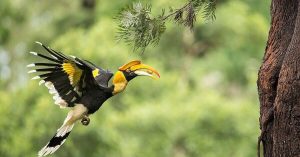
Hornbill Natural History: Yellow-Casqued Hornbill Behavior
Scientific documentation of yellow-casqued hornbill feeding and foraging behaviors reveals the earth-probing actions that Senufo culture transformed into sacred agricultural symbolism.
View Full-Size Image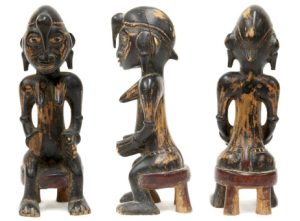
Fertility Dance Practices: Hornbill Sculptures in Agricultural Ritual
Ceremonial practices documented in mid-20th century ethnographic research reveal how hornbill sculptures were paraded and animated during fertility dances designed to invoke agricultural and human fertility.
View Full-Size Image