
VALSUANI
Lost-Wax Bronze Casting: The Valsuani Method

What is lost-wax casting? Lost-wax casting (cire perdue) reproduces a sculptor’s model in wax, encases it in a heat-proof mould, and melts the wax out so molten bronze can fill the exact cavity — capturing finer detail than any other traditional casting method. Claude Valsuani was its most celebrated Parisian practitioner.
Lost-wax casting, known in French as cire perdue, represents one of humanity’s oldest and most sophisticated metalworking techniques. Archaeological evidence traces its origins to Mesopotamia over five thousand years ago, and it remains the preferred method for creating fine art bronzes because it captures extraordinary detail, every fingerprint, every texture, every nuance of the original sculpture.
The Valsuani foundry became legendary for its mastery of this demanding process. Claude Valsuani’s technical excellence, particularly his skill in the critical finishing stages of chasing and patination, made his establishment the choice of sculptors who demanded the highest fidelity to their artistic vision.
The Complete Process
Lost-wax casting proceeds through eleven distinct phases:
- The Original Model: The artist creates the master sculpture in clay, wax, or plaster
- Mold Making: A flexible mold captures every surface detail
- The Wax Replica: Molten wax creates a hollow replica 3-6mm thick
- Wax Chasing: Artisans refine the wax, removing seam lines
- The Sprue System: Wax rods create channels for bronze flow and gas escape
- The Ceramic Shell: Layers of ceramic slurry and fine sand build a hard shell
- Burnout: Heat melts the wax out, leaving a perfect cavity
- The Pour: Molten bronze at approximately 1,100°C fills the mold
- Breaking Out: The ceramic shell is broken away
- Chasing: Metal workers remove sprues, weld seams, refine surfaces
- Patination: Chemical treatments create the final color
Mastery of each phase, particularly the final stages of chasing and patination, distinguished exceptional foundries like Valsuani from merely competent ones. When museums and collectors encounter a bronze marked “C. VALSUANI CIRE PERDUE,” they recognize a guarantee of technical excellence, the collaborative achievement of sculptor and founder working together toward a shared artistic vision.
Last updated: 7 September 2026
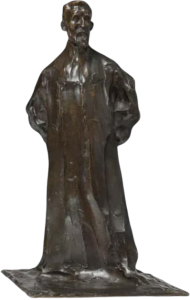
Details (4)

What Is Lost-Wax Casting?
Lost-wax casting (cire perdue) is a five-thousand-year-old bronze casting technique that captures extraordinary detail, the preferred method for fine art bronzes since antiquity.
Read the Full Study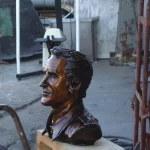
The Valsuani Process Step by Step
A detailed technical guide to the complete lost-wax bronze casting process as practiced at the Valsuani foundry, eleven phases from original model to finished patinated bronze.
Read the Full Study
Why Valsuani Was Famous for Cire Perdue
Claude Valsuani's exceptional skill in chasing and patination elevated his foundry above competitors, technical mastery combined with artistic sensitivity that attracted the era's greatest sculptors.
Read the Full Study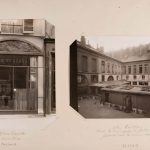
Valsuani vs Hébrard: Paris Foundries
The early twentieth century was a golden age for Paris bronze casting. Understanding Valsuani's position relative to competitors like Hébrard illuminates the foundry's distinctive excellence.
Read the Full Study