WHO FOUNDED THE VALSUANI FOUNDRY?
Primary Documents: The Evidence Gallery
The case against “Marcello Valsuani” rests upon irrefutable documentary evidence created during Claude’s lifetime or shortly after his death. These documents were not produced to settle later historical debates, they simply record facts as they were known and verified at the time.
Evidentiary Standards
Primary sources hold privileged status in historical methodology because they represent direct, contemporaneous evidence. Unlike secondary sources that interpret or compile earlier materials, primary documents provide unmediated access to historical facts. The documents presented here meet the highest standards of archival authenticity:
- Institutional provenance: Official state, municipal, and ecclesiastical records
- Contemporaneous creation: Produced during or shortly after the events they document
- Multiple independent sources: Cross-corroborating evidence from separate archives
- Original language preservation: Italian and French texts with verified translations
Document Corpus
The following pages present four categories of primary evidence:
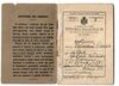
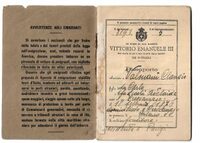
- Claude’s 1911 Passport: Official Kingdom of Italy identification explicitly stating “figlio di sig. Carlo”
- Claude’s 1923 Death Certificate: Parish record confirming “figlio di fu Carlo” at the moment of death
- 1929 Business Letterhead: Official foundry correspondence using “C. VALSUANI”, never “M. VALSUANI”
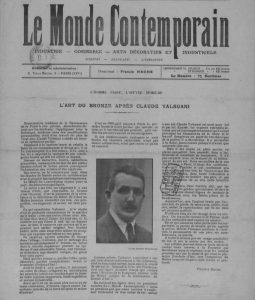
- Le Monde Contemporain Article: Contemporary press naming Claude as founder while living memory persisted
Collectively, these documents establish an unbroken evidentiary chain from Claude’s birth to his death and beyond, consistently naming Carlo as his father and Claude as the foundry’s creator. Not a single document supports the existence of “Marcello Valsuani.”
Evidence
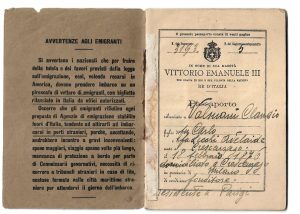
Claude's 1911 Passport: 'Figlio di sig. Carlo'
Official Italian passport from 1911 explicitly stating Claude was the son of Mr. Carlo, government-issued identification requiring verified parentage.
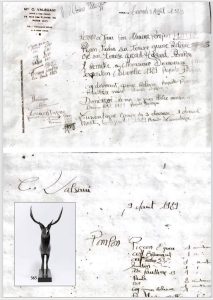
Business Letterhead: 'C. VALSUANI'
1929 business letterhead displaying 'C. VALSUANI' and 'FONDEE EN 1908', official commercial documentation using Claude's initial, never 'M. VALSUANI'.
View Full-Size Image