CLAUDE VALSUANI: MASTER BRONZE FOUNDER
Marcel Continues the Legacy
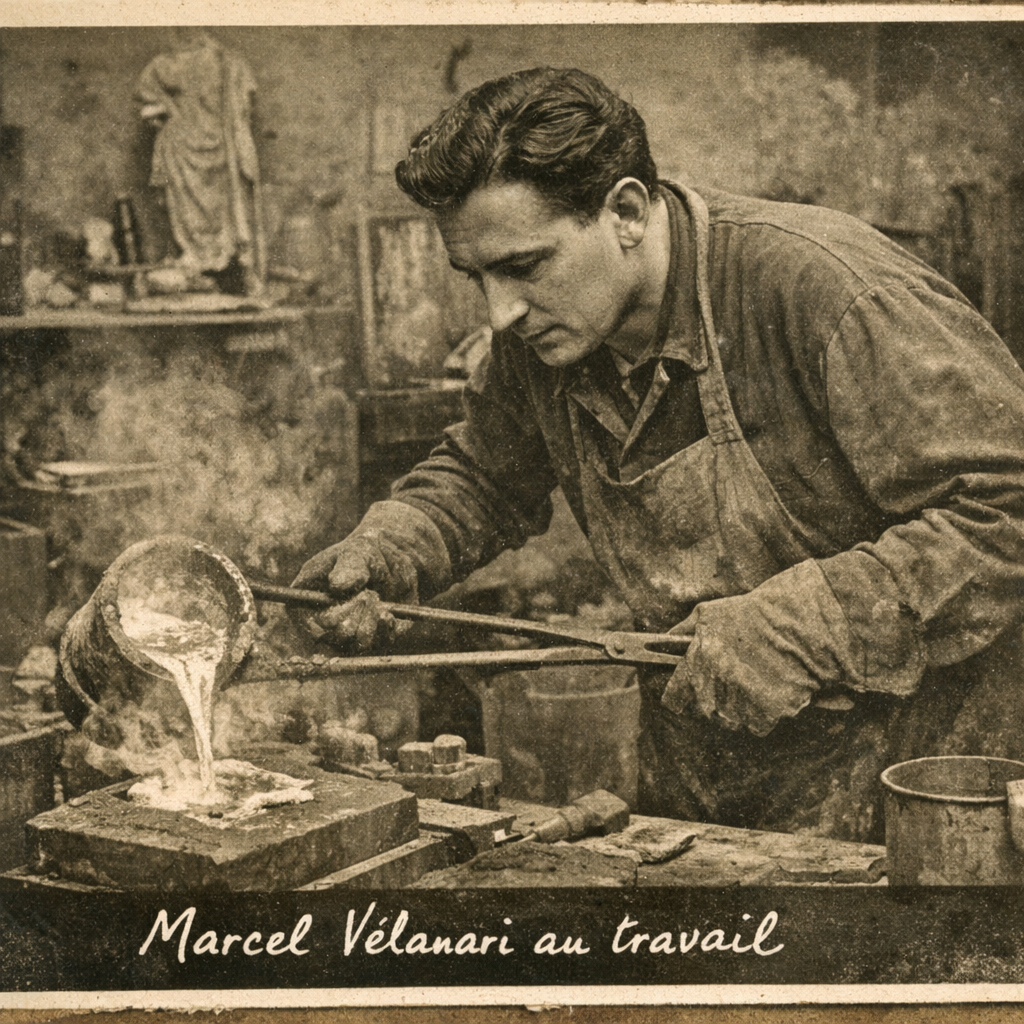
Following Claude Valsuani’s death in 1923, his son Marcel assumed responsibility for the foundry at 74 Rue des Plantes, continuing the family tradition of bronze casting excellence.
Documentary Evidence
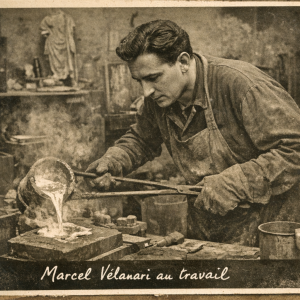
Historical photographs from the foundry archives show Marcel at work, bearing captions identifying “Marcel Vélanari au travail” (Marcel at work), with “Vélanari” representing either a variant spelling or transcription error of the Valsuani name. These images document the generational continuity of the enterprise.
The Origin of “Marcello”?
The phonetic similarity between “Marcel” (French) and “Marcello” (Italian) provides the most compelling explanation for the myth’s origins:
- Later art historians encountered the name “Marcel” in foundry records and photographs
- Assuming an Italian founding family should bear Italian names, they unconsciously Italianized “Marcel” to “Marcello”
- This constructed “Marcello” was then promoted to an earlier generation as a supposed patriarch or founder
- The error entered secondary literature and replicated through citation without verification
This hypothesis elegantly explains both the complete absence of “Marcello” in primary documents and the presence of a similar-sounding name in the actual historical record.
State Recognition: Légion d’Honneur and Ordre National du Mérite
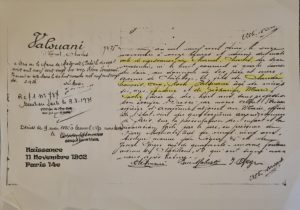
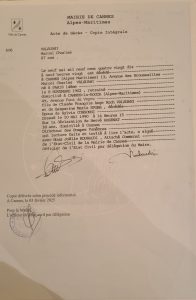
Marcel’s stewardship earned France’s highest distinctions. Born 8 November 1902 in Paris 14e (birth certificate; the 1967 nomination form independently agrees), he led the foundry’s casting from 1923 and was made Chevalier de la Légion d’Honneur in January 1953 (Journal Officiel, 18 April 1953). On 18 May 1967, after 44 years of service, the Ministry of State for Cultural Affairs nominated him Chevalier de l’Ordre National du Mérite, praising bronzes that “rival the finest Florentine bronzes of the sixteenth century” and explicitly recording the father-to-son lineage: “il a hérité de son père”. He died in Cannes on 9 May 1990.
Foundry Continuation
Under Marcel’s stewardship, the Valsuani foundry continued operating throughout the twentieth century, maintaining its reputation for lost-wax casting excellence. The establishment finally closed in 2016, ending over a century of bronze casting at the legendary address. Throughout this entire period, the myth of “Marcello” persisted in secondary sources even as the documentary record consistently told a different story.
Last updated: 7 September 2026