FROM SACRED FUNCTION TO AESTHETIC OBJECT
Western Reinterpretations: Style vs. Spirit
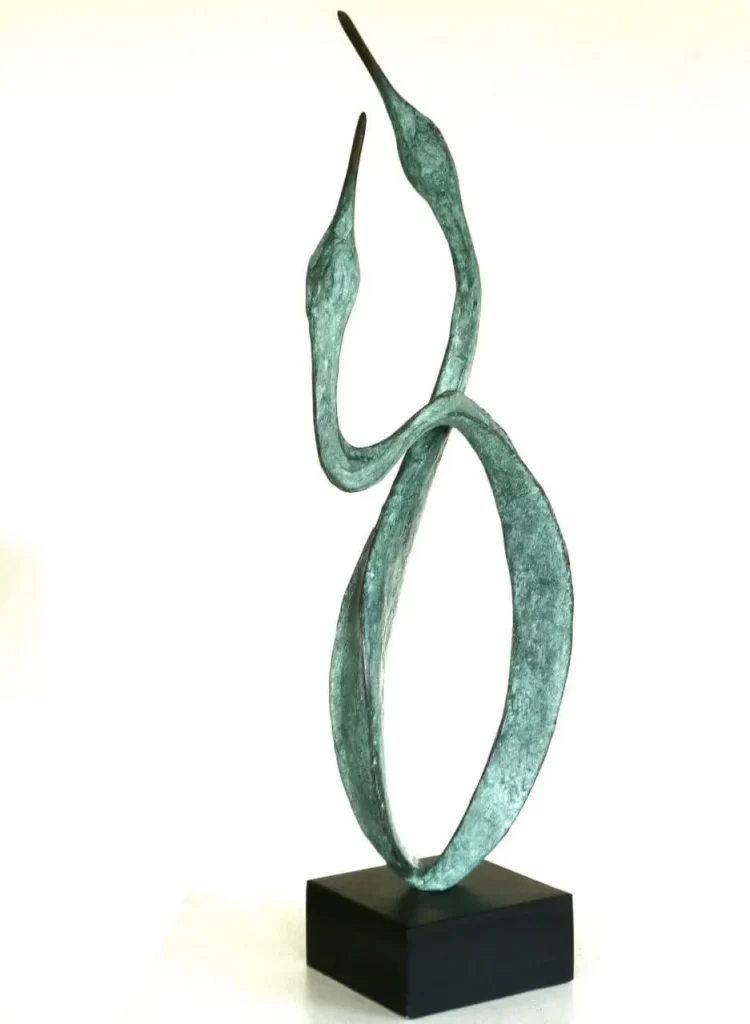
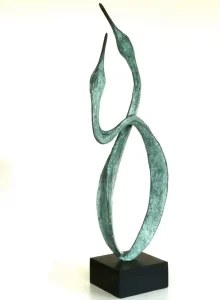
Western artists and designers have created numerous reinterpretations of the Senufo hornbill, translating ritual object into decorative sculpture. These adaptations reveal what Western aesthetics value and what they discard.
Common Reinterpretation Patterns
Style and Abstraction: Western interpretations frequently extract the hornbill’s symbolic geometry, emphasizing elongated forms and minimal surface detail while focusing on silhouette, creating abstracted sculptural tributes to the original work. These pieces prioritize visual impact over symbolic encoding.
Color and Surface Play: Traditional Senufo pieces employ natural pigments with ritual significance (colors chosen for spiritual properties). Western reinterpretations introduce bold colors, lacquer finishes, or metallic embellishments suited to modern aesthetic preferences and interior design trends. Surface becomes decorative rather than spiritually charged.
Scale and Medium Shifts: Reinterpretations often appear in smaller, stylized forms using materials like metal, resin, or even glass, making pieces more adaptable for decorative or architectural contexts compared to traditionally tall ritual wooden statues (sometimes exceeding 3 feet). Medium shift from wood to metal fundamentally changes the object’s material relationship to natural/spiritual forces.
Contextual Transformation: Removed from their original ritual function, Western renditions become studio pieces, gallery objects, or home decor, cultural celebrations presented as aesthetic rather than ceremonial. They decorate rather than mediate.
What Persists
Even in radical reinterpretation, certain formal elements prove remarkably persistent:
- The distinctive elongated vertical silhouette
- The curved beak (though not always touching the belly)
- Extended form suggesting both bird and abstract human figure
- Sense of dignified presence and spiritual gravitas
Western artists seem unable to escape the power of the original form, even when consciously creating “original” work, the Senufo template shapes their vision.
What Disappears
But fundamental aspects vanish in translation:
- Ceremonial function and spiritual societal role (initiation, guardianship, divination)
- Marks of age, ritual wear, or symbolic paint bearing specific meanings
- Deep connection to Senufo oral history and myth
- Understanding of the piece as living spiritual practice rather than aesthetic object
- Knowledge systems that decode the symbolic language encoded in form
Western reinterpretations create visually striking objects while losing precisely what made the originals spiritually powerful: their role as vessels for divine forces, tools for community ritual, encoded teachings for initiates, and living connections to primordial creation.