
THE SENUFO HORNBILL: SACRED SYMBOL OF CREATION
From Sacred Function to Aesthetic Object
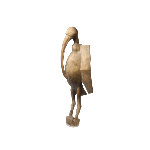
By the mid-20th century, large Senufo bird sculptures appeared prominently in West African tourist markets. What began as sacred ritual objects vessels of spiritual power used in ceremonies connecting communities to ancestors and divine forces transformed into decorative items for Western collectors. This transformation reveals both appreciation and appropriation.
The Original Context
In traditional Senufo practice, hornbill sculptures served multiple sacred functions:
- Agricultural Guardians: Placed in cultivated fields, they invoked ancestral blessings and divine protection for crops. These weren’t mere scarecrows but spiritual conduits making present the creative power of the “first creature” to ensure continued fertility.
- Initiation Tools: During Poro ceremonies, hornbill figures appeared as teaching aids and spiritual guardians. Their presence marked spaces and moments when divine knowledge transferred to initiates.
- Funeral Rites: In multi-day “dry funeral” ceremonies held during the dry season after harvest, hornbill imagery helped guide deceased souls through dangerous regions toward the ancestor world. As research on Senufo funeral practices documents, “the hornbill represents the protector bird who transports the souls of the deceased to the other world.”
- Fertility Dances: Carried or worn during ceremonial dances, hornbill sculptures became animated vessels participants believing divine power flowed through them to renew the community’s generative capacity.
Western ‘Discovery’ and Transformation
When European collectors and dealers encountered these sculptures in the early-to-mid 20th century, they recognized aesthetic power but fundamentally misunderstood purpose:
- Stylized Form Appreciated, Function Ignored: Western observers praised the “abstract” geometric forms and elongated proportions while viewing ritual function as primitive superstition rather than sophisticated spiritual technology.
- Market Creation: As documented in Susan Gagliardi’s Met Museum research, “large bird sculptures filled West African tourist markets by the twentieth century” as dealers actively sought pieces for Western collections. Economic pressure encouraged both authentic ritual objects and tourist reproductions.
- Museum Display: Institutions like the Metropolitan Museum of Art and the Yves Saint Laurent Museum in Marrakech now display hornbill sculptures as fine art contextualizing them through aesthetic analysis rather than spiritual function.
What Persists, What Disappears
In Western reinterpretation:
Retained: The distinctive silhouette elongated beak, extended form, vertical posture, the geometric wing boards, the curved beak touching protruding belly.
Lost or Altered: Ceremonial function and spiritual role (initiation, guardianship, divination), marks of ritual use and symbolic paint, deep connection to Senufo oral history and living myth the sculpture becomes visual aesthetic rather than living spiritual practice.
This transformation isn’t necessarily theft many pieces reached museums through legitimate purchase. But it represents a fundamental category error: treating as art objects items conceived and created as spiritual technology.
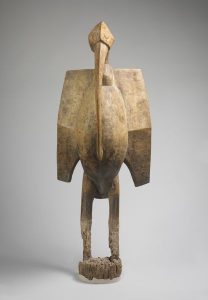
Evidence

Museum Display Context: Met Museum Sejen Bird
The Metropolitan Museum of Art's display of Senufo hornbill sculptures demonstrates how Western institutions frame these objects through aesthetic rather than spiritual lenses, creating new meanings divorced from original function.
View Full-Size Image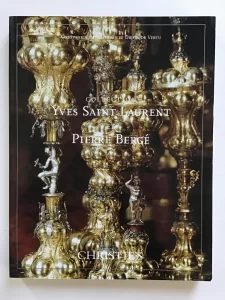
Yves Saint Laurent's First Purchase: 1960 Acquisition
Fashion designer Yves Saint Laurent's 1960 purchase of a Senufo hornbill sculpture (his first art acquisition) demonstrates how these ritual objects became prized possessions for Western collectors drawn to their aesthetic power while divorced from cultural context.
View Full-Size Image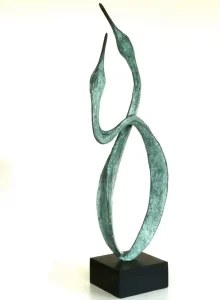
Western Reinterpretations: Style vs. Spirit
Contemporary Western artists create hornbill-inspired works that extract formal elements while abandoning spiritual content, revealing both appreciation for Senufo aesthetics and fundamental misunderstanding of original purpose.
View Full-Size Image