
SENUFO HORNBILL
Senufo Hornbill
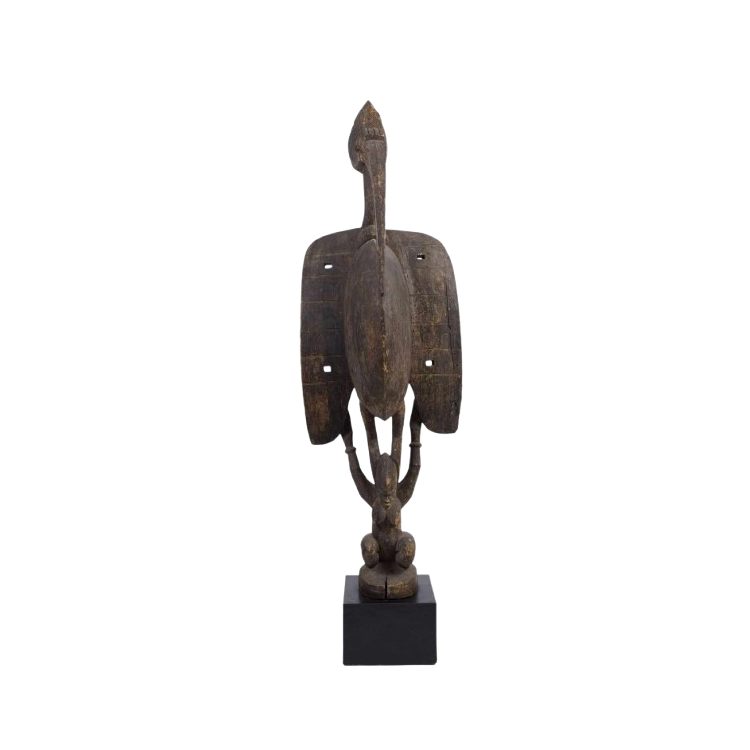
The Porpianong bird sculpture represents one of West African art’s most spiritually significant artifacts, embodying the Senufo people’s understanding of creation, fertility, and cosmic order. According to
Senufo cosmology, the hornbill was “the first living being created by the gods,” existing before humans, agriculture, or social structures, making it a primordial mediator between the spiritual and material worlds. These carved wooden sculptures ranging from modest table-top size to towering three-foot forms display distinctive features including elongated bodies, curved beaks touching swollen bellies
(symbolizing male and female creative principles), and geometric wing boards representing the complexity of existence itself. For over a millennium, Senufo communities have used hornbill sculptures in Poro initiation ceremonies, agricultural rituals, and fertility dances, invoking the original creative power to renew life and ensure community continuity. The journey of these sacred objects from ritual use in
West African villages to display in Western museums reveals both the profound spiritual knowledge systems of the Senufo people and the complex process of cultural translation that occurs when sacred art
enters the global marketplace.
Topic Pages (5)
The Senufo People: Guardians of Ancient Wisdom
The Senufo are a West African ethnic group of 1-1.5 million people primarily inhabiting northern Cote d'Ivoire, southern Mali, and western Burkina Faso. Their culture (structured around agriculture, age-grade initiation, and profound spiritual beliefs connecting living and ancestral realms) has preserved knowledge systems spanning centuries despite colonial disruption and modern pressures.
Read the Full Study
The Senufo Hornbill: Sacred Symbol of Creation
The Porpianong bird sculpture represents one of the most profound spiritual artifacts of West African culture. According to Senufo cosmology, the hornbill was 'the first living being created by the gods,' embodying the connection between spiritual and mortal realms.
Read the Full Study
Agricultural Fertility and the Cycle of Life
The hornbill's symbolic association with fertility extends beyond metaphor into practical agricultural ritual. For the Senufo people, whose existence depended on successful harvests, the bird's earth-probing behavior and seasonal calls provided divine guidance for planting, growth, and harvest cycles.
Read the Full Study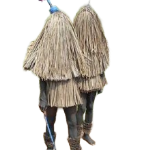
Poro Initiation: Spiritual Education Through Art
The Poro society's 21-year initiation process transforms Senufo boys into community elders through symbolic death, spiritual education, and ritual knowledge. Hornbill imagery structures this journey, appearing at each stage as boys learn increasingly sophisticated understandings of creation, fertility, and cosmic order.
Read the Full Study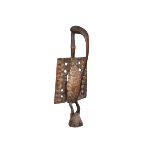
From Sacred Grove to Western Gallery: Cultural Translation and Loss
The journey of Senufo hornbill sculptures from ritual objects used in sacred ceremonies to art gallery pedestals reveals a complex process of cultural translation. Western institutions celebrate the aesthetic power while systematically erasing the spiritual function, ritual knowledge, and living cultural context that gave these objects meaning.
Read the Full StudyFAQ Q&A