
SENUFO HORNBILL
The Senufo People: Guardians of Ancient Wisdom

The Senufo people population 1-1.5 million inhabit a geographic region spanning northern Cote d’Ivoire, southern Mali, western Burkina Faso, and northwestern Ghana. Once unified in the Kenedougou kingdom, they now exist as numerous communities sharing linguistic, cultural, and spiritual traditions despite colonial borders dividing their territories.
Social and Cultural Organization
Senufo society structures itself around age-grade systems and initiation ceremonies. These institutions guide individuals through different life stages, ensuring cultural knowledge, spiritual values, and social responsibilities transmit across generations. Initiation isn’t merely rite of passage but the primary educational mechanism preserving the community’s collective wisdom.
Key Social Institutions:
Poro Society: The male initiation association guiding boys toward respected community membership through 21-year educational process. Poro maintains social order, transmits agricultural and spiritual knowledge, and structures political authority.
Sandogo Society: Primarily female diviners who interpret spiritual signs, determine agricultural timing, and mediate between living and spiritual realms. Sandogo members hold specialized knowledge of natural signs including hornbill behavior and ritual healing.
Age-Grade Cohorts (Colobeles): Same-age peer groups moving through life stages together, creating horizontal social bonds complementing vertical family lineages.
Elder Authority: Those completing advanced initiation stages gain authority to make community decisions regarding political, religious, and social matters. Age and initiation completion determine social standing more than wealth or family lineage.
Spiritual Beliefs
Senufo spirituality emphasizes continuity between the living, the ancestors, and the divine:
Supreme Deity: Called “Old Mother” in some contexts, understood as both male and female aspects. Created the world and established the patterns governing existence.
Ancestors: Deceased community members who successfully completed life transitions occupy the ancestral realm. They protect living descendants, communicate through dreams and signs, and participate in rituals when properly invoked.
Spirits and Forces: Natural features, animals, and ritual objects can embody or channel spiritual forces. The hornbill, as primordial creation, carries particular spiritual potency.
Ritual Balance: Ceremonies maintain harmony between realms, protect the community, ensure agricultural fertility. Sacred spaces, shrines, and ceremonial dances connect participants to spiritual forces through drumming, chanting, masked performance, and symbolic objects.
Economic Foundation: Agriculture
The Senufo name means “those who work in the field” agriculture defines community life:
Primary Crops: Millet, sorghum, yams, cotton, rice in some regions
Seasonal Rhythms: Dry season agricultural off-season for ceremonies and social events; rainy season intensive agricultural labor.
Land Tenure: Communal ownership with family use rights; land can’t be sold, only inherited or redistributed
Agricultural Knowledge: Sophisticated understanding of crop rotation, soil management, seasonal timing passed through generations and encoded in ritual knowledge systems
Global Recognition and Contemporary Challenges
Senufo art and philosophy have gained international recognition, with sculptures and masks displayed in museums worldwide (Metropolitan Museum, Musee du Quai Branly, British Museum, many others). Their traditions embody universal themes of creation, fertility, and ancestral guidance while expressing unique cultural identity.
Yet this global appreciation coexists with existential threats to traditional culture:
- Islamic and Christian conversion reducing Poro participation
- Formal education competing with initiation for youth time
- Urban migration separating young people from village knowledge systems
- Economic pressures encouraging sale of sacred objects
- Climate change disrupting agricultural patterns that ritual calendars assumed stable
Despite these pressures, the Senufo continue to uphold traditions, ensuring cultural heritage remains a living and evolving force rather than frozen museum artifact.
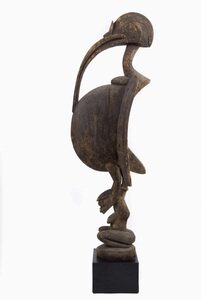
Details (2)
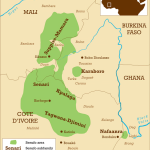
Geographic Distribution and Historical Kingdom
The Senufo people occupy territories spanning four modern nations (Cote d'Ivoire, Mali, Burkina Faso, and Ghana) reflecting both their pre-colonial kingdom's extent and colonial borders' violent disruption of ethnic territories.
Read the Full Study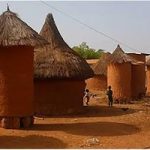
Village Structure and Social Organization
Traditional Senufo villages organize in circular patterns with the chief's house at center and sacred spaces at periphery, physically encoding the social hierarchy and spiritual geography that structure community life.
Read the Full Study