
THE SENUFO PEOPLE: GUARDIANS OF ANCIENT WISDOM
Village Structure and Social Organization
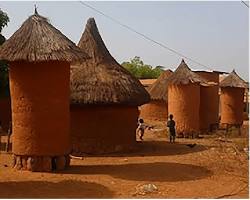
Senufo village architecture and spatial organization reflect cultural values, social hierarchies, and spiritual beliefs. The physical layout of villages encodes invisible social structures and cosmological understandings.
Traditional Village Layout
Circular Organization:
Senufo villages traditionally organize in roughly circular patterns with clear spatial hierarchy:
Center:
- Chief’s house (largest structure, often raised or distinguished architecturally)
- Ceremonial square for community gatherings, announcements, judicial proceedings
- Symbolic center representing political authority and community unity
Inner Ring:
- Houses of elder Poro members and respected families
- Proximity to center reflects social status and political influence
- Family compounds with multiple structures for extended family units
Outer Ring:
- Houses of younger families and those with less social standing
- Newer arrivals to the village
- Gradual integration toward center as individuals age and complete initiation stages
Periphery:
- Carvers’ quarters (often separated due to perceived spiritual power/danger of their work)
- Blacksmiths (whose work with fire and metal carries spiritual implications)
- Agricultural fields extending outward from village core
- Sacred groves (sinzanga) where Poro initiation occurs
Architectural Forms
Residential Structures:
- Round mud-brick houses with thatched conical roofs
- Family compounds with multiple structures around central courtyard
- Granaries for storing millet and sorghum (raised to protect from rodents and moisture)
- Kitchens (often separate structures due to fire risk)
Ceremonial Structures:
- Spirit houses (kargbee) with elaborate carved decorations
- Ancestral shrines (often small structures or designated spaces within compounds)
- Mask storage houses (restricted access, spiritually protected)
Social Organization Within Villages
Family Structures (Matrilineal and Patrilineal Elements):
Senufo kinship involves complex interplay:
- Inheritance: Primarily patrilineal (father to son)
- Clan Identity: Matrilineal elements (clan membership through mother)
- Residence: Patrilocal (wives move to husbands’ family compounds)
- Authority: Male elders hold formal political power; female elders (especially Sandogo) hold spiritual authority
Age-Grade Systems:
Cross-cutting family lineages:
- Colobeles (same-age cohorts) create horizontal bonds
- Age-grade groups work collectively on community projects
- Social standing increases with age and initiation completion regardless of family wealth
- Elder authority transcends individual family power
Gendered Spaces:
Male Domains:
- Poro sacred groves (women strictly forbidden)
- Ceremonial spaces during certain male initiation rites
- Political decision-making forums
Female Domains:
- Kitchens and food preparation areas
- Certain market spaces
- Sandogo divination sites
- Women’s agricultural work areas
Shared Spaces:
- Central ceremonial square (with gender-segregated sections during some ceremonies)
- Agricultural fields (with gendered task divisions)
- Markets and trade areas
Sacred Geography
Village space contains visible and invisible dimensions:
Visible Sacred Sites:
- Spirit houses with carved guardians
- Ancestral shrines marked by offerings
- Ceremonial squares where masks appear
Invisible Sacred Geography:
- Spiritual pathways connecting village to sacred groves
- Protective boundaries created by ritual objects and procedures
- Dangerous zones requiring spiritual protection to traverse
- Ancestor presence concentrated in certain areas
Contemporary Changes
Modern Senufo villages show various degrees of transformation:
Partial Modernization:
- Rectangular houses with corrugated metal roofs alongside traditional round structures
- Central squares with mosques or churches added to traditional ceremonial spaces
- Roads cutting through traditional circular patterns
- Schools and health clinics creating new focal points
Urban Migration Impact:
- Many villages now primarily inhabited by elders, women, and children
- Young men working in cities return periodically
- Reduced labor for community projects and agricultural work
- Weakened age-grade cohesion as colobeles disperse
Persistent Elements:
- Even modernized villages often maintain sacred groves at periphery
- Ceremonial squares continue functioning for festivals and important gatherings
- Social hierarchies based on age and initiation completion remain influential
- Chief’s central position (though authority may be challenged by educated youth, religious leaders, or government officials)