
FROM SACRED GROVE TO WESTERN GALLERY: CULTURAL TRANSLATION AND LOSS
The Met Museum Paradox: Preservation Through Decontextualization
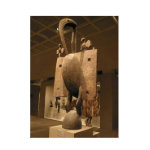
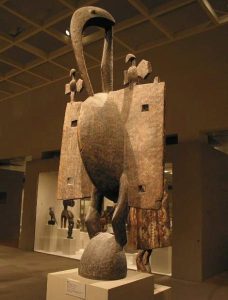
The Metropolitan Museum of Art in New York houses one of the world’s premier collections of Senufo art, including multiple hornbill sculptures (cataloged as “Sejen birds”). Examining how the Met presents these objects reveals the epistemological paradoxes of cross-cultural museum practice.
Display Methodology
Physical Presentation:
- Individual sculptures isolated on neutral pedestals against plain backgrounds
- Removal from agricultural fields, sacred groves, funeral ceremonies, the contexts that gave them meaning
- Lighting emphasizing sculptural form and surface texture
- Climate-controlled environment preserving material integrity
- Security systems protecting objects as valuable cultural property
Interpretive Framework:
Met labels emphasize:
- Formal Qualities: “elongated form,” “geometric abstraction,” “stylized features”
- Material Information: Wood type, carving techniques, surface treatments
- Geographic Origin: Northern Cote d’Ivoire, Senufo people
- Historical Context: “20th century,” “associated with Poro initiation society”
- Aesthetic Connections: Influences on modernist Western art movements
Met labels minimize or omit:
- Specific Ritual Use: How this particular object functioned in ceremonies
- Spiritual Efficacy: Whether communities believed it possessed or channeled divine power
- Initiatory Knowledge: The theological frameworks making symbolic encoding comprehensible
- Contemporary Significance: How living Senufo communities view museum display of sacred objects
- Acquisition Ethics: Circumstances under which the object left its cultural context
Catalog Documentation
Met catalog entries provide:
- Accession number and date acquired
- Dealer or donor information
- Provenance when known (often incomplete)
- Measurements and material analysis
- Photographic documentation
- Comparative references to similar objects
- Art historical scholarship citations
What This Approach Accomplishes:
Material Preservation: The Met’s climate control, conservation work, and security genuinely preserve physical objects that might deteriorate in their original contexts.
Public Access: Objects once accessible only to Poro initiates now viewable by millions of annual museum visitors.
Scholarly Research: Concentration of objects enables comparative study impossible in dispersed village contexts.
Aesthetic Appreciation: Formal presentation allows viewers to perceive the sculptural power Western artists recognized in African art.
What This Approach Loses:
Living Knowledge: The sculpture becomes historical artifact rather than active ritual object.
Experiential Meaning: Museum visitors can’t access the embodied knowledge Poro initiates develop through years of ritual participation.
Spiritual Function: The object’s purpose shifts from mediating divine forces to representing cultural heritage.
Indigenous Epistemology: Senufo ways of knowing (through ritual, symbolism, spiritual experience) become invisible within Western art historical frameworks.
The Knowledge Paradox
The Met creates accurate knowledge about aspects of Senufo sculpture accessible to Western observation: form, material, geographic origin, approximate age, aesthetic qualities. This knowledge is real and valuable.
But this same institutional framework renders invisible knowledge accessible only through Senufo initiation: symbolic encodings, ritual efficacy, spiritual power, theological significance, experiential meanings.
The result: museums preserve material culture while systematically erasing cultural knowledge. Visitors leave with sophisticated understanding of sculptural form but fundamental ignorance of why these objects were created and what they meant to the people who made them.
Evidence
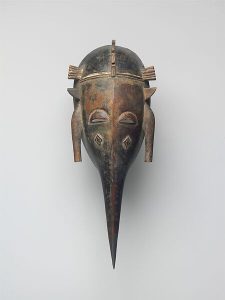
Met Museum Catalog Entry Analysis: Sejen Bird (Acc. 312223)
Detailed examination of a specific Met Museum catalog entry for a Senufo hornbill sculpture reveals what Western institutional documentation captures and what it structurally cannot access.
View Full-Size Image