THE MET MUSEUM PARADOX: PRESERVATION THROUGH DECONTEXTUALIZATION
Met Museum Catalog Entry Analysis: Sejen Bird (Acc. 312223)
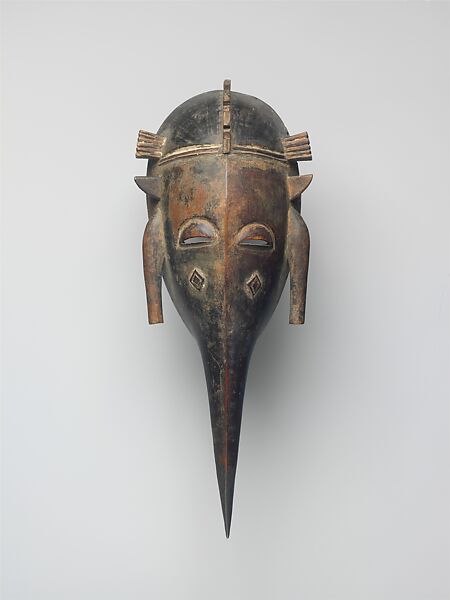
The Metropolitan Museum of Art’s accession 312223 provides a representative example of how Western institutions document Senufo hornbill sculptures.
Complete Catalog Entry Information:
Object Designation: “Sejen Bird”
Culture: Senufo peoples
Geographic Origin: Cote d’Ivoire
Date: 20th century
Medium: Wood
Dimensions: [Specific measurements provided]
Classification: Wood-Sculpture
Credit Line: [Donor/acquisition information]
Accession Number: 312223
Descriptive Text (representative excerpt):
“This bird sculpture represents a stylized hornbill, an important symbol in Senufo culture associated with fertility and the Poro initiation society. The elongated vertical form, prominent beak, and geometric wing boards demonstrate the characteristic Senufo sculptural aesthetic that influenced 20th century European modernist movements.”
What This Documentation Captures:
- Physical Description: Accurate measurements, material identification
- Geographic Attribution: Correct ethnic and regional identification
- Temporal Placement: General dating to 20th century
- Cultural Association: Recognition of Poro society connection
- Aesthetic Analysis: Formal characteristics described with art historical terminology
- Art Historical Context: Connections to Western modernism noted
What This Documentation Omits:
- Specific Ritual Use: No information about whether this particular sculpture saw ritual use or was created for sale
- Village of Origin: General “Cote d’Ivoire” rather than specific community
- Carver Identity: No artist attribution (though Senufo carvers often worked anonymously or semi-anonymously)
- Acquisition Circumstances: Limited information about how the object left its original context
- Contemporary Significance: No consultation with living Senufo communities about museum display
- Symbolic Encoding: No decoding of carved patterns and formal features’ theological meanings
- Initiatory Knowledge: No access to the three-stage educational framework giving the sculpture comprehensible meaning
Epistemological Limitations:
The Met’s documentation methodology:
1. Privileges Observable Form: Material, measurements, visible features receive detailed attention
2. Contextualizes Historically: Places object in past rather than acknowledging potential ongoing significance
3. Emphasizes Western Connections: Influence on modernism highlighted over indigenous meanings
4. Generalizes Cultural Information: Broad statements about Poro society without specific ritual details
5. Avoids Spiritual Claims: Careful not to validate or invalidate beliefs about the object’s sacred power
Comparison to Indigenous Documentation:
If a Poro elder were to document this same object, the description would emphasize:
- Ritual Function: Specific ceremonies where this form of hornbill appears
- Symbolic Meanings: Theological significance of carved patterns, proportions, formal features
- Spiritual Efficacy: Whether and how the sculpture mediates divine forces
- Initiatory Context: Which Poro stage one must complete to fully understand the object
- Community Memory: Stories associated with similar sculptures, legendary carvings, master carvers
- Proper Use: Protocols for handling, positioning, activating the object’s power
These indigenous documentation categories are structurally impossible for Western institutions to capture without extensive collaboration with knowledgeable community members, collaboration that rarely occurs at the depth necessary for genuine understanding.