
AGRICULTURAL FERTILITY AND THE CYCLE OF LIFE
Seasonal Calls and Agricultural Timing: The Hornbill as Divine Calendar
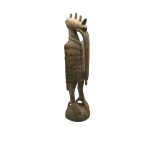
In societies without written calendars or meteorological technology, determining optimal agricultural timing required sophisticated observation of natural signs. For the Senufo people, the hornbill’s seasonal behavior provided crucial guidance not understood as mere natural pattern but as divine communication from a creature possessing primordial knowledge of cosmic cycles.
Observed Natural Patterns
Yellow-casqued hornbills in West Africa display seasonal behavior patterns:
- Pre-Rainy Season Activity: Increased calling and territorial behavior before rainy seasons
- Nesting Timing: Breeding cycles coordinated with seasonal changes, with females entering nest cavities before rains
- Movement Patterns: Seasonal migration or range shifts responding to rainfall and food availability
These patterns correlate remarkably well with optimal planting times for traditional Senufo crops which are millet, sorghum, yams and cotton. Birds become more active and vocal precisely when farmers need to prepare fields and plant seeds.
From Natural Sign to Divine Message
Senufo spiritual understanding doesn’t interpret these correlations as evolutionary adaptation or biological response to environmental cues. Instead, the hornbill’s seasonal behavior demonstrates its possession of primordial knowledge as the “first living being created by the gods,” it knows the cosmic rhythms established at creation.
When the hornbill calls before rains, it isn’t responding to atmospheric pressure changes the meteorological explanation but exercising its ancient knowledge to communicate planting times to humans. The bird, in this theological framework, deliberately shares divine wisdom.
Sandogo Society Interpretation
Members of the Sandogo society Senufo diviners who determine agricultural timing specialized in interpreting hornbill communications:
Interpretive Methods:
- Call Patterns: Different hornbill vocalizations indicated different agricultural actions prepare fields, plant grain crops, plant tubers, expect heavy vs light rains.
- Movement Observations: Flight directions, gathering patterns, and territorial behaviors provided additional data for divination.
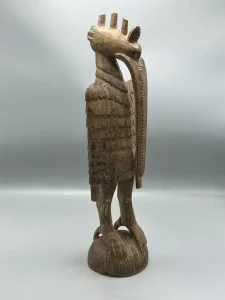
- Ritual Consultation: Sandogo members used hornbill sculptures in divination rituals, asking the bird’s spirit to reveal planting schedules through signs and omens.
- Community Guidance: Based on hornbill interpretation, Sandogo diviners advised communities when to begin specific agricultural tasks.
Practical Effectiveness
Remarkably, this spiritual system produced effective agricultural results. Communities following Sandogo hornbill interpretations generally achieved successful harvests, suggesting the traditional knowledge system encoded genuine environmental understanding even if explained through theological rather than scientific frameworks.
Contemporary agricultural scientists studying traditional Senufo farming acknowledge the accuracy of hornbill-based timing, noting that indigenous environmental observation often surpasses modern meteorological prediction for local conditions.
Evidence
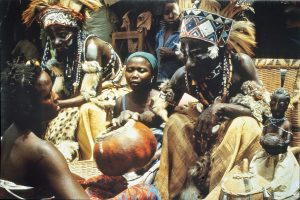
Sandogo Divination Practices: Agricultural Timing Determination
Documentation of Sandogo society practices reveals sophisticated systems for interpreting hornbill behavior to determine optimal planting schedules, combining spiritual understanding with environmental observation.
View Full-Size Image