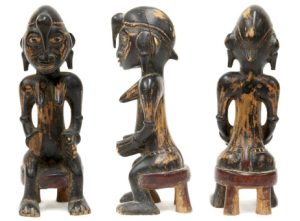
THE HORNBILL'S EARTH-PROBING BEAK: DIVINE TEMPLATE FOR PLANTING
Fertility Dance Practices: Hornbill Sculptures in Agricultural Ritual
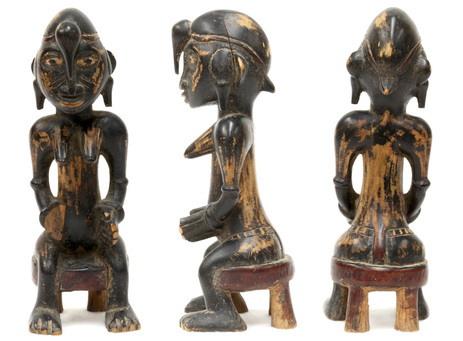
Ethnographic documentation from the mid-20th century captures Senufo fertility ceremonies where hornbill sculptures played central roles. These rituals demonstrate how symbolic meaning translated into embodied practice.
Ceremonial Context:
Fertility dances occurred at specific moments in the agricultural calendar:
- Before planting season invoking successful germination.
- During early growth encouraging crop development.
- Before harvest giving thanks for abundance.
These weren’t separate ceremonies for agricultural vs human fertility but integrated rituals recognizing the fundamental unity of all generative processes.
Role of Hornbill Sculptures:
During fertility dances:
- Parading: Large hornbill carvings were carried through villages and around field borders. Bearers typically Poro members who had completed advanced initiation stages lifted sculptures overhead or positioned them on their shoulders.
- Animation: Rather than treating carvings as static objects, participants believed divine power flowed through them during ceremony. The sculpture became, temporarily, a vessel for the hornbill’s primordial creative force.
- Wearing: Some ceremonies involved smaller hornbill masks or headdresses worn by dancers. These performers embodied the bird’s energy, their movements re-enacting the earth-probing planting motion and the bird’s calls signaling rain.
- Positioning: At climactic moments, sculptures were positioned at field edges or near agricultural implements, physically blessing the tools and land with the bird’s creative power.
Participant Experience:
Accounts from ceremony participants collected by anthropologists with appropriate permissions and translated from Senufo languages describe:
- Feeling the sculpture “activate” during dance becoming warm, seeming to vibrate with energy
- Hearing the hornbill’s calls during ceremony as spiritual communication rather than natural bird sounds
- Experiencing fertility dance as making present the original creation moment not remembering or symbolizing but actually re-presenting divine creative power
Contemporary Practice:
While some Senufo communities have discontinued these ceremonies due to religious conversion (Islam, Christianity) or modernization, others maintain them. Contemporary practitioners report the same phenomenological experiences the sculpture as living vessel, the dance as creative act, the hornbill’s continued presence as guardian of agricultural knowledge.