THE HORNBILL'S EARTH-PROBING BEAK: DIVINE TEMPLATE FOR PLANTING
Hornbill Natural History: Yellow-Casqued Hornbill Behavior
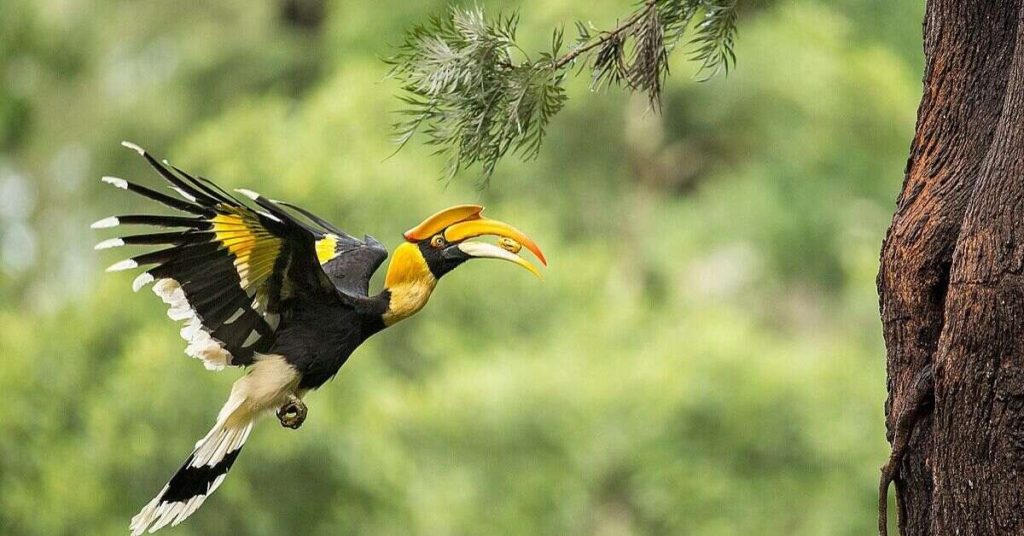
The yellow-casqued hornbill (Tockus leucomelas), the species most common in Senufo territory across Cote d’Ivoire, Mali, and Burkina Faso, displays distinctive foraging behaviors:
Feeding Patterns:
- Omnivorous diet including insects, small vertebrates, fruits, and seeds
- Uses powerful beak to turn over leaf litter and probe soil
- Digs in soft earth to access beetle larvae and other underground prey
- Manipulates food items with precise beak movements
Ground Foraging:
Unlike many bird species that primarily feed in trees, yellow-casqued hornbills spend significant time on the ground. Observers describe their characteristic “probing” motion:
1. Bird hops to new ground location
2. Inserts beak into leaf litter or soft soil
3. Opens beak to create leverage, turning over material
4. Searches revealed area for prey
5. Moves to next location and repeats
This systematic ground-probing creates visible disturbances in soil and leaf litter marks that human observers could easily interpret as deliberate earth cultivation.
Seasonal Patterns:
Hornbill ground-foraging intensifies during certain seasons, particularly before rainy periods when insects emerge. This temporal correlation with agricultural planting season would have been impossible for Senufo observers to miss the bird’s earth-probing behavior coincides precisely with when humans need to plant crops.
Symbolic Resonance:
From a Senufo perspective, these aren’t coincidences but demonstrations of the hornbill’s primordial knowledge. The bird doesn’t simply happen to probe earth before rains it knows, through divine wisdom granted at creation, that this is the time for earth-engagement. Its behavior provides the template humans should follow.