
HOW THE BLANCHE RECORD SHOULD BE CORRECTED
Evidence for an Early 1904 Date
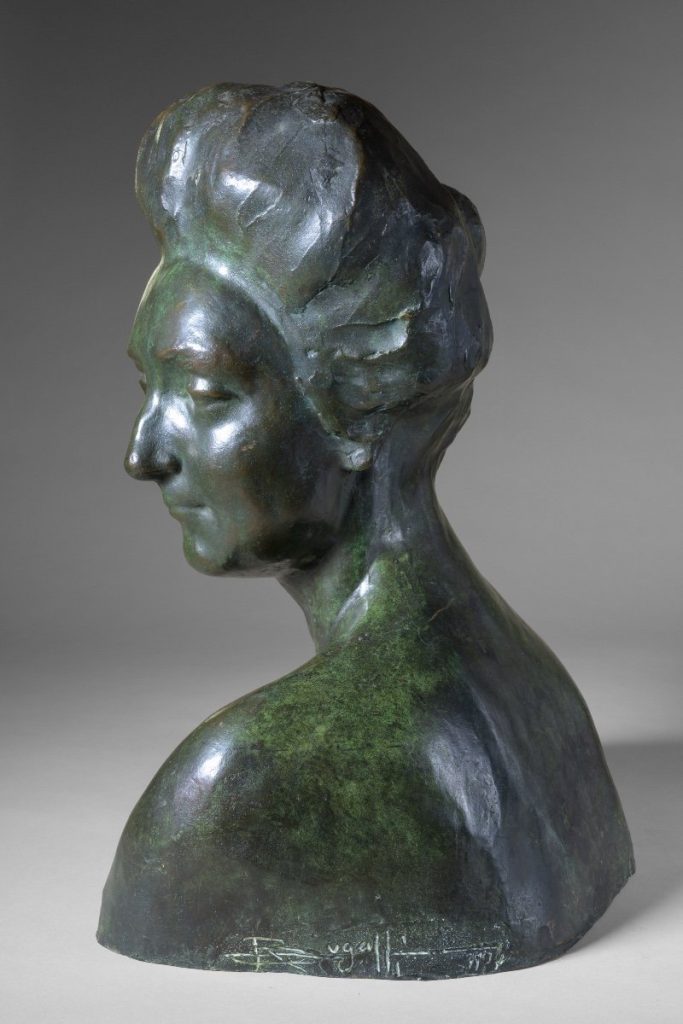
The argument for a date around 1904 rests on the convergence of three independent lines of evidence. No single line is definitive on its own. Together they form the strongest available reading of when this portrait was made.
The first line is biographical constraint. Blanche Denise Ferrero-Willmann was resident in Paris from her marriage in 1898 until the family’s emigration in 1907. A portrait sitting would need to fall within that window. The year 1904 sits within Bugatti’s documented early Paris period and within the biographical window. It is consistent with both the sitter’s presence and the artist’s activity in the city.
The second line is the social connection. Felix Ferrero’s work as a praticien in Rodin’s professional orbit placed the Ferrero household inside the world Rembrandt Bugatti inhabited during his Paris years. Bugatti arrived in Paris in the early 1900s and was embedded in the same professional community through shared studio connections and exhibition circles. The social pathway for an encounter between Bugatti and Blanche Denise is not speculative; it follows from documented professional relationships.
The third line is stylistic comparison. Listing material dating this bust to an early period is consistent with the visual treatment visible in the object. The handling of the surface, the compositional approach, and the portrait scale align with the conventions of Bugatti’s early portrait production before his move to Antwerp in 1906. The portrait idiom of the Blanche Denise bust belongs to the earlier period.
The circa 1904 date is the conclusion that best fits the available evidence. It is presented as the probable date, not a certainty, pending further cast-specific provenance documentation.
Evidence

Comparative Listing: Early Date Reference
Secondary source indicating 1904 framing.
View Full-Size Image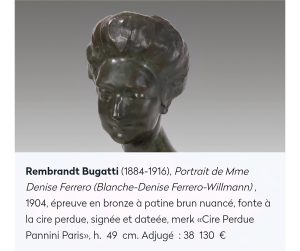
Auction Record: Cast and Attribution Details
Secondary evidence with date framing and founder notation.
View Full-Size Image