
THE SENUFO HORNBILL: SACRED SYMBOL OF CREATION
Intellectual Prowess and Elder Knowledge
The Senufo people recognize the hornbill not merely as a symbol of fertility but as an embodiment of intellectual prowess. Its designation as “Porpianong” literally “master among the birds” reflects observed behaviors that Senufo culture interprets as markers of exceptional intelligence and wisdom.
Behavioral Observations
Real hornbills (the yellow-casqued hornbill being the specific species most common in Senufo territory) display behaviors that informed this symbolic association:
- Tool Use: Hornbills demonstrate problem-solving abilities, using their powerful beaks to access food sources other birds cannot reach.
- Monogamous Partnerships: Pairs mate for life, suggesting to Senufo observers a capacity for commitment and relationship maintenance requiring intelligence.
- Parental Care: The species practices unusual nesting behavior where females seal themselves in tree cavities, depending on males to provision them a pattern Senufo elders interpret as demonstrating trust, planning, and cooperative intelligence.
Knowledge Transmission in Poro
Within the Poro initiation system, the hornbill image becomes explicitly associated with the transfer of knowledge from elders to initiates. As documented in research on Senufo initiation rites, the 21-year Poro process (divided into three seven-year stages) uses hornbill imagery to represent the intellectual transformation initiates must undergo.
During the first stage (Poworo, ages 6-10), young initiates learn to recognize hornbill symbols and understand their basic significance. By the second stage (Kwonro, adolescence), they learn to craft ritual objects including hornbill representations. The final stages (Tyolog and Kaffono, ages 30+) reveal deeper philosophical meanings how the hornbill’s “first creation” status makes it the original repository of divine knowledge.
Divinatory Knowledge
Members of the Sandogo society Senufo diviners who determine agricultural timing and interpret spiritual signs particularly associate themselves with hornbill wisdom. Their practice of interpreting the bird’s calls to determine planting schedules represents a specialized knowledge system passed down through generations.
The hornbill’s appearance before rains isn’t understood as simple natural behavior but as the bird exercising its primordial knowledge of seasonal patterns knowledge it possessed from the world’s creation. Diviners don’t merely observe the bird; they interpret its communication of ancient wisdom.
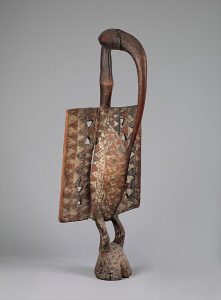
Evidence

Poro Initiation Stages: Knowledge Transmission Framework
Documentation of the 21-year Poro initiation process reveals how hornbill imagery structures the transmission of knowledge from elders to successive generations, with increasing layers of meaning revealed at each stage.
View Full-Size Image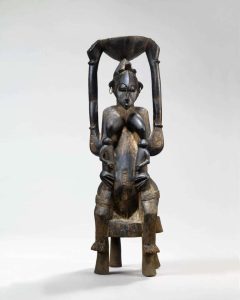
Sandogo Society: Divinatory Knowledge Systems
The Sandogo society's practice of interpreting hornbill behavior to determine agricultural timing demonstrates specialized knowledge transmission associated with the bird's symbolic status as bearer of ancient wisdom.
View Full-Size Image